Depression

Condition

What is Depression?

Depression, a common mental health disorder, can range from mild or moderate depression to major depression and severe depression. The American Psychiatric Association recognizes it as a significant health concern that affects daily life and overall well-being.
Recognizing Depression

Depression symptoms can vary but typically include persistent sadness, loss of interest in activities, and feelings of hopelessness. Recognizing these symptoms is the first step in seeking help.

Consulting a Healthcare Professional

A mental health professional plays a crucial role in diagnosing depression, differentiating between major depressive disorder, persistent depressive disorder (dysthymia), and other forms of clinical depression through psychological evaluation and medical tests.

Treatment Modalities for Depression

Treatment options for depression are diverse, ranging from medication and therapy to lifestyle changes and alternative treatments, depending on the severity and type of depression.

Depression Treatment Near Las Vegas

In the vibrant yet often overwhelming setting of Las Vegas, finding effective help for depression is crucial. The Halo Health Clinic, located conveniently near Las Vegas, offers a compassionate and comprehensive approach to treating depression. With a team of skilled professionals, the clinic specializes in a range of evidence-based treatments tailored to each individual's unique experience with depression. From traditional psychotherapy and medication management to innovative therapies, The Halo Health Clinic is dedicated to helping patients navigate their journey towards mental wellness. For those in and around Las Vegas struggling with depression, The Halo Health Clinic provides a supportive, healing environment to regain balance and joy in life.

Types of Depression

Major Depressive Disorder (MDD)

This is a classic form of depression, characterized by persistent sadness, loss of interest in activities, and a range of physical and emotional problems.

Persistent Depressive Disorder (Dysthymia)

A chronic form of depression where symptoms last for at least two years, often less severe than major depression but more enduring.

Bipolar Disorder

Previously known as manic depression, bipolar disorder involves episodes of depression interspersed with periods of mania or hypomania.

Seasonal Affective Disorder (SAD)

This type of depression is related to changes in seasons, typically starting in the fall and continuing into the winter months.

Postpartum Depression

Postpartum is a type of depression that can occur in women after giving birth, characterized by feelings of extreme sadness, anxiety, and exhaustion.

Premenstrual Dysphoric Disorder (PMDD)

A severe form of premenstrual syndrome (PMS), PMDD causes extreme mood shifts and physical symptoms before menstruation.

Atypical Depression

This type is characterized by mood reactivity (moods that are strongly affected by positive or negative events) and a range of atypical symptoms.

Psychotic Depression

A severe form of depression accompanied by some form of psychosis, such as having disturbing false beliefs or a break from reality (delusions), or hearing or seeing upsetting things that others cannot hear or see (hallucinations).

Situational Depression (Adjustment Disorder)

Often triggered by a significant life change or stressful life event, such as the loss of a loved one or serious illness.

Treatment-Resistant Depression

This term is used to describe cases of major depressive disorder that do not respond to traditional treatments like medication and psychotherapy.

Medication for Depression

Antidepressant medications, especially selective serotonin reuptake inhibitors (SSRIs), are commonly prescribed for treating depression, particularly major depression. They help balance brain chemicals but may have side effects.

Psychotherapy

Talk therapy, including cognitive-behavioral therapy (CBT) and interpersonal therapy (IPT), is effective in treating symptoms of depression, especially in cases of mild or moderate depression.

Lifestyle Changes and Home Remedies

Regular exercise, a balanced diet, adequate sleep, and stress reduction techniques like progressive muscle relaxation can complement other depression treatments.

Alternative Treatments

Some individuals may find relief from depressive symptoms through herbal remedies, mindfulness, meditation, and other holistic approaches, though these should be pursued in conjunction with professional medical advice.

The Importance of Support Systems

Family and friends, as well as support groups, play a vital role in supporting those undergoing treatment for depression.

Dealing with Treatment-Resistant Depression

For severe depression that doesn’t respond to conventional treatments, options like electroconvulsive therapy (ECT) and transcranial magnetic stimulation (TMS) might be considered.

Ongoing Management of Depression

Managing depression is an ongoing process that requires regular follow-ups with a mental health professional and adherence to the prescribed treatment plan.

Depression Statistics in Las Vegas

Depression remains one of the most prevalent mental health conditions in the United States, profoundly affecting communities in urban areas like Las Vegas. In 2023, approximately 21 million adults nationwide reported experiencing at least one major depressive episode, with Nevada showing higher-than-average rates due to factors such as economic stress, limited access to mental health care, and urban isolation. Depression symptoms, including persistent sadness, loss of interest in activities, fatigue, and difficulty concentrating, can significantly disrupt daily life and impact relationships, careers, and overall well-being. These statistics highlight the importance of expanding mental health resources in Las Vegas to address this widespread issue effectively.

For Las Vegas residents, the growing availability of treatment options such as cognitive-behavioral therapy (CBT), teletherapy, and medication management offers hope for managing depression. However, stigma and lack of awareness still prevent many individuals from seeking help. Community outreach programs and educational initiatives can play a vital role in normalizing conversations about depression and ensuring residents are aware of the support available to them. By fostering an inclusive and proactive mental health culture, Las Vegas can make strides in reducing the impact of depression on its population.

Seeking Help

Effective treatment for depression is available, and with the right combination of therapy, medication, and support, it's essential to seek help and develop a comprehensive plan to treat depression. By utilizing a combination of medication, therapy, lifestyle changes, and support systems, individuals with depression can work towards recovery and improve their quality of life.

Remember, managing depression is a journey, and it's important to stay connected with healthcare providers and support networks throughout this process. For further information and resources, it is advisable to consult with healthcare professionals and refer to guidelines provided by the American Psychiatric Association.

If you or anyone you know is struggling with depression in Las Vegas, contact Halo Health Clinic today! (702) 718-7353

What is Depression?

Depression, a common mental health disorder, can range from mild or moderate depression to major depression and severe depression. The American Psychiatric Association recognizes it as a significant health concern that affects daily life and overall well-being.

Recognizing Depression

Depression symptoms can vary but typically include persistent sadness, loss of interest in activities, and feelings of hopelessness. Recognizing these symptoms is the first step in seeking help.

Consulting a Healthcare Professional

A mental health professional plays a crucial role in diagnosing depression, differentiating between major depressive disorder, persistent depressive disorder (dysthymia), and other forms of clinical depression through psychological evaluation and medical tests.

Treatment Modalities for Depression

Treatment options for depression are diverse, ranging from medication and therapy to lifestyle changes and alternative treatments, depending on the severity and type of depression.

Depression Treatment Near Las Vegas

In the vibrant yet often overwhelming setting of Las Vegas, finding effective help for depression is crucial. The Halo Health Clinic, located conveniently near Las Vegas, offers a compassionate and comprehensive approach to treating depression. With a team of skilled professionals, the clinic specializes in a range of evidence-based treatments tailored to each individual's unique experience with depression. From traditional psychotherapy and medication management to innovative therapies, The Halo Health Clinic is dedicated to helping patients navigate their journey towards mental wellness. For those in and around Las Vegas struggling with depression, The Halo Health Clinic provides a supportive, healing environment to regain balance and joy in life.

Types of Depression

Major Depressive Disorder (MDD)

This is a classic form of depression, characterized by persistent sadness, loss of interest in activities, and a range of physical and emotional problems.

Persistent Depressive Disorder (Dysthymia)

A chronic form of depression where symptoms last for at least two years, often less severe than major depression but more enduring.

Bipolar Disorder

Previously known as manic depression, bipolar disorder involves episodes of depression interspersed with periods of mania or hypomania.

Seasonal Affective Disorder (SAD)

This type of depression is related to changes in seasons, typically starting in the fall and continuing into the winter months.

Postpartum Depression

Postpartum is a type of depression that can occur in women after giving birth, characterized by feelings of extreme sadness, anxiety, and exhaustion.

Premenstrual Dysphoric Disorder (PMDD)

A severe form of premenstrual syndrome (PMS), PMDD causes extreme mood shifts and physical symptoms before menstruation.

Atypical Depression

This type is characterized by mood reactivity (moods that are strongly affected by positive or negative events) and a range of atypical symptoms.

Psychotic Depression

A severe form of depression accompanied by some form of psychosis, such as having disturbing false beliefs or a break from reality (delusions), or hearing or seeing upsetting things that others cannot hear or see (hallucinations).

Situational Depression (Adjustment Disorder)

Often triggered by a significant life change or stressful life event, such as the loss of a loved one or serious illness.

Treatment-Resistant Depression

This term is used to describe cases of major depressive disorder that do not respond to traditional treatments like medication and psychotherapy.

Medication for Depression

Antidepressant medications, especially selective serotonin reuptake inhibitors (SSRIs), are commonly prescribed for treating depression, particularly major depression. They help balance brain chemicals but may have side effects.

Psychotherapy

Talk therapy, including cognitive-behavioral therapy (CBT) and interpersonal therapy (IPT), is effective in treating symptoms of depression, especially in cases of mild or moderate depression.

Lifestyle Changes and Home Remedies

Regular exercise, a balanced diet, adequate sleep, and stress reduction techniques like progressive muscle relaxation can complement other depression treatments.

Alternative Treatments

Some individuals may find relief from depressive symptoms through herbal remedies, mindfulness, meditation, and other holistic approaches, though these should be pursued in conjunction with professional medical advice.

The Importance of Support Systems

Family and friends, as well as support groups, play a vital role in supporting those undergoing treatment for depression.

Dealing with Treatment-Resistant Depression

For severe depression that doesn’t respond to conventional treatments, options like electroconvulsive therapy (ECT) and transcranial magnetic stimulation (TMS) might be considered.

Ongoing Management of Depression

Managing depression is an ongoing process that requires regular follow-ups with a mental health professional and adherence to the prescribed treatment plan.

Depression Statistics in Las Vegas

Depression remains one of the most prevalent mental health conditions in the United States, profoundly affecting communities in urban areas like Las Vegas. In 2023, approximately 21 million adults nationwide reported experiencing at least one major depressive episode, with Nevada showing higher-than-average rates due to factors such as economic stress, limited access to mental health care, and urban isolation. Depression symptoms, including persistent sadness, loss of interest in activities, fatigue, and difficulty concentrating, can significantly disrupt daily life and impact relationships, careers, and overall well-being. These statistics highlight the importance of expanding mental health resources in Las Vegas to address this widespread issue effectively.

For Las Vegas residents, the growing availability of treatment options such as cognitive-behavioral therapy (CBT), teletherapy, and medication management offers hope for managing depression. However, stigma and lack of awareness still prevent many individuals from seeking help. Community outreach programs and educational initiatives can play a vital role in normalizing conversations about depression and ensuring residents are aware of the support available to them. By fostering an inclusive and proactive mental health culture, Las Vegas can make strides in reducing the impact of depression on its population.

Seeking Help

Effective treatment for depression is available, and with the right combination of therapy, medication, and support, it's essential to seek help and develop a comprehensive plan to treat depression. By utilizing a combination of medication, therapy, lifestyle changes, and support systems, individuals with depression can work towards recovery and improve their quality of life.

Remember, managing depression is a journey, and it's important to stay connected with healthcare providers and support networks throughout this process. For further information and resources, it is advisable to consult with healthcare professionals and refer to guidelines provided by the American Psychiatric Association.

If you or anyone you know is struggling with depression in Las Vegas, contact Halo Health Clinic today! (702) 718-7353

Our Approach to Treating Anxiety

Anxiety disorders affect everyone differently. That’s why our treatment plans combine therapy, medication support, and lifestyle techniques tailored to your unique needs.
1

Generalized Anxiety Disorder

2

Panic Disorder

3

 Social Anxiety Disorder

4

Separation Anxiety

5

Phobias

Anxiety Treatment Near Las Vegas

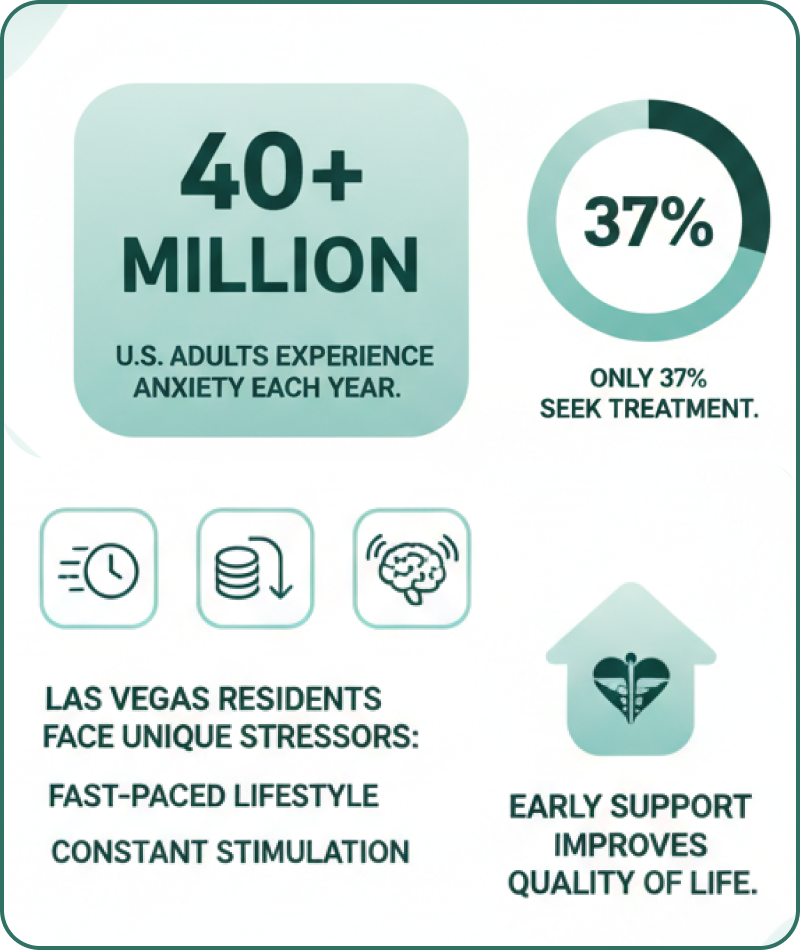
Las Vegas is full of energy, stimulation, and constant activity — which can intensify anxiety for many people. The fast pace, bright lights, noise, and pressure to “keep up” can lead to stress, sensory overload, and emotional burnout. Halo Health offers a calm, supportive alternative in a high-stimulus environment, giving you space to breathe, reset, and heal.

Anxiety Therapy Services Offered

Cognitive-behavioral therapy (CBT) and other evidence-based methods to treat root causes and reduce symptoms.

Group Therapy

Supportive sessions where clients connect, learn coping skills, and build confidence.

Medication Management

Professional evaluation and prescription support, including SSRIs and other safe, effective medications.

Teletherapy Options

HIPAA-compliant virtual sessions for convenient, flexible care.

Mindfulness & Stress Reduction

Breathing exercises, grounding techniques, meditation, and yoga to calm the body and mind.

Meet Your Care Team

Our team includes experienced psychiatrists, psychologists, nurse practitioners, and therapists specializing in anxiety and mood disorders.

Why Choose Halo Health?

Cognitive-behavioral therapy (CBT) and other evidence-based methods to treat root causes and reduce symptoms.

Personalized anxiety treatment plans

Same-week appointments

Experienced and compassionate clinicians

Calm, welcoming environment

Proven treatment methods

Teletherapy available

Anxiety in Las Vegas:
What the Numbers Show

Over 40 million U.S. adults experience anxiety each year — and Las Vegas residents face unique stressors, from fast-paced lifestyles to economic pressures. Despite how common anxiety is, only 37% seek treatment. Early support can dramatically improve quality of life.

Additional Resources

Halo Health provides ongoing education, workshops, and support resources for anxiety, stress management, and emotional well-being.

Frequently Asked Question

What are the signs of a panic attack?
The standard lorem ipsum passage has been a printer's friend for centuries. Like stock photos today, it served as a placeholder for actual content. The original text comes from Cicero's philosophical work "De Finibus Bonorum et Malorum," written in 45 BC.
Can anxiety occur with other conditions?
The standard lorem ipsum passage has been a printer's friend for centuries. Like stock photos today, it served as a placeholder for actual content. The original text comes from Cicero's philosophical work "De Finibus Bonorum et Malorum," written in 45 BC.
What types of anxiety disorders are there?
The standard lorem ipsum passage has been a printer's friend for centuries. Like stock photos today, it served as a placeholder for actual content. The original text comes from Cicero's philosophical work "De Finibus Bonorum et Malorum," written in 45 BC.
What treatments work best?
The standard lorem ipsum passage has been a printer's friend for centuries. Like stock photos today, it served as a placeholder for actual content. The original text comes from Cicero's philosophical work "De Finibus Bonorum et Malorum," written in 45 BC.
What are the signs of a panic attack?
The standard lorem ipsum passage has been a printer's friend for centuries. Like stock photos today, it served as a placeholder for actual content. The original text comes from Cicero's philosophical work "De Finibus Bonorum et Malorum," written in 45 BC.

Don’t Let Anxiety Control Your Life

Start your healing journey with a confidential consultation at Halo Health.

Contact Us

For inquiries or to schedule an appointment, our contact information, including our Las Vegas address, phone number-(702) 718-7353, and email, is readily available. Our online form and map directions to our facility make reaching out even easier.
Thank you! Your submission has been received!
Oops! Something went wrong while submitting the form.